Why Can't Adults Hear High-Pitched Sounds? The Mosquito Tone Explained
Some sounds teenagers can hear but most adults can't. Why we lose the highest pitches first as we age, what happens to the hair cells in your ear, and how to protect your hearing.
November 9, 2026 · 2 min read
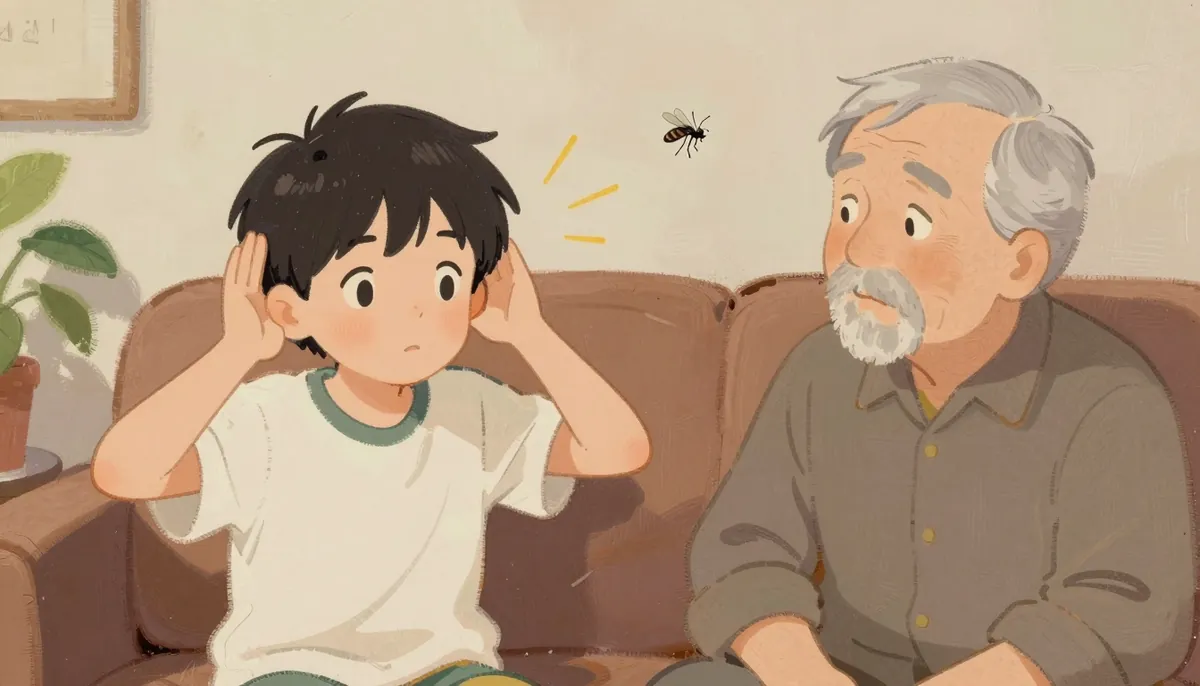
Ever heard of a high-pitched beep that a whole classroom of students can hear while the teacher hears nothing? It is real. As we get older, our ears gradually lose the ability to hear the highest pitches first. Here is why.
How high can humans hear?
The range of human hearing is usually given as 20 Hz to 20,000 Hz (20 kHz). The higher the number, the higher the pitch. Most of the human voice sits far lower, in the hundreds to a few thousand hertz, so losing the very top of the range barely affects conversation.
Hearing all the way up to 20 kHz is mostly something children and teenagers can do. With age, the highest pitch you can hear slowly comes down.
Why high pitches go first: hair cells
Deep inside your ear, the cochlea is lined with hair cells that turn vibrations into nerve signals. Hair cells near the entrance of the cochlea respond to high pitches, while those farther in handle low pitches.
- The cells near the entrance take in the vibrations of every sound first, so they tend to wear out earliest.
- In humans, damaged hair cells do not grow back.
So over the years, the cells for high pitches are lost first, and high sounds fade first. Hearing loss that comes with age is called presbycusis, and the slow changes actually begin in early adulthood.
The “mosquito tone”
Tones around 17 kHz sound shrill to many young people but are hard for many adults to hear. That is why devices playing such tones have been used in some countries to stop teenagers from loitering, and why “teen buzz” ringtones became a way for students to hear their phones while teachers could not.
It is not just age
How well you hear high pitches also depends heavily on how much loud sound you have been exposed to: concerts, construction noise and loud earphones are the usual suspects. The World Health Organization has repeatedly warned that many young people risk hearing damage from unsafe listening habits.
Habits that protect your hearing
- Keep earphone volume low enough that people nearby cannot hear it
- Give your ears regular breaks after long listening sessions
- In noisy places, use noise cancelling instead of turning the volume up
- Wear earplugs at concerts and other loud venues
- If speech starts to sound muffled or you hear constant ringing, get your hearing checked
In one line
The hair cells that handle high pitches wear out first and do not grow back, which is why high sounds fade first with age. Avoiding loud noise keeps your ears younger for longer.
How high can you still hear? 👉 Hearing Age Test