Types of Color Blindness Explained: Red-Green, Blue-Yellow and More
Does color blindness mean seeing in black and white? Usually not. The difference between color weakness and color blindness, the main types, and everyday tips that help.
November 9, 2026 · 2 min read
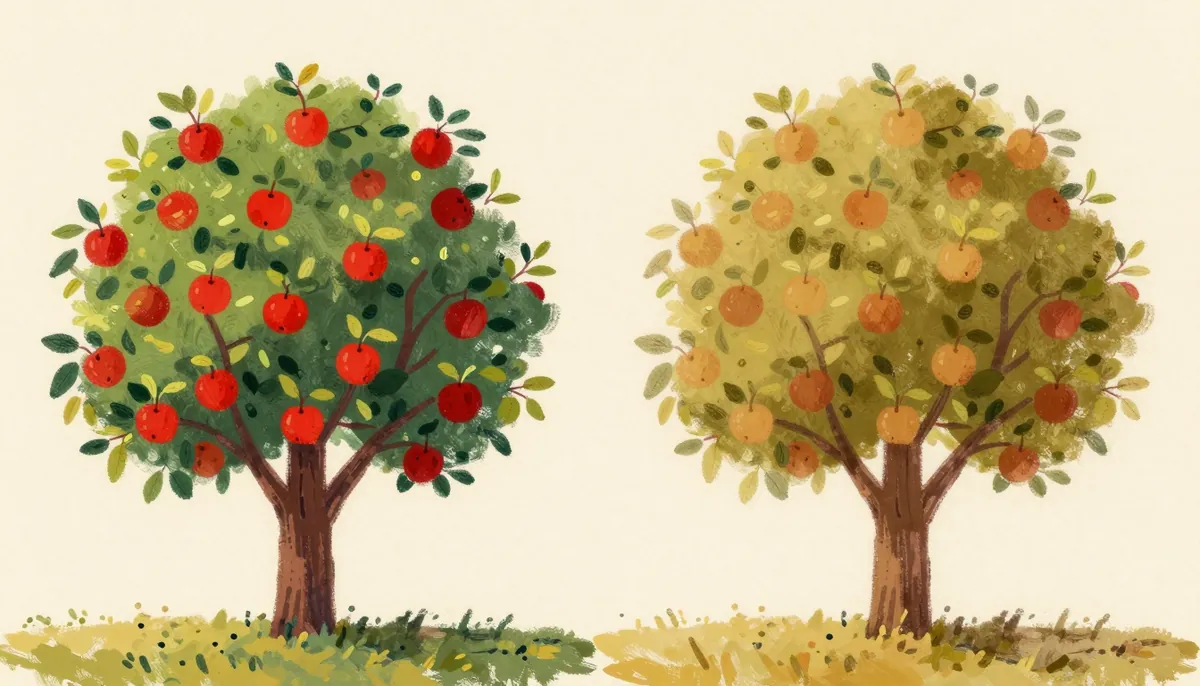
“If you’re color blind, do you see everything in black and white?” It is a common question, but the answer is almost always no. Seeing no color at all is very rare. Most people with color blindness simply find certain colors look alike. Here is what is going on and what the main types are.
Three kinds of color-sensing cells
Your eyes have three kinds of cone cells that sense color. Each responds best to long wavelengths (the red end), medium wavelengths (green) or short wavelengths (blue). Your brain compares the signals from the three to create the colors you see.
Color vision deficiency happens when one of these three cone types is missing or shifted so that it responds to slightly different colors.
Color weakness vs. color blindness
- Anomalous trichromacy (“color weakness”): all three cone types are there, but one is shifted toward another. You see color, but some similar shades are hard to tell apart. This is the most common form.
- Dichromacy (“color blindness”): one cone type does not work at all, so you see color with only two. More color pairs look alike.
- Monochromacy: the cones barely work and color is almost impossible to tell apart. This is very rare.
Which colors get confused? The main types
| Type | Affected cones | Colors that are easy to confuse |
|---|---|---|
| Protan (protanomaly, protanopia) | Red | Red, green and brown; reds look darker |
| Deutan (deuteranomaly, deuteranopia) | Green | Red, green, brown and orange |
| Tritan (tritanomaly, tritanopia) | Blue | Blue and green, yellow and pink |
Protan and deutan together are called red-green color blindness, and deuteranomaly is the most common type of all. Blue-yellow (tritan) deficiency is much rarer.
Why it is more common in men
The genes for the red and green cones sit on the X chromosome. Men have only one X, so a single altered copy shows up directly. Women have two, and the other copy often makes up for it. That is why red-green color blindness is far more common in men, affecting roughly 1 in 12 men of Northern European ancestry compared with about 1 in 200 women.
Everyday tips
- Try your phone’s color filters or color correction settings, which shift confusing colors apart.
- On charts and maps, look for shapes, patterns and labels, not just color.
- Label clothes or supplies with their color names.
- Traffic lights can be read by which light is on, not only by its color.
Most color vision deficiency is present from birth and causes few problems in daily life, though some jobs and licenses have color vision standards. An eye doctor can give you a formal diagnosis.
In one line
Color weakness means one cone type is slightly shifted; color blindness means one does not work. The most common kind by far is red-green.
Check your own color vision 👉 Color Blind Test · More about cone cells 👉 How Do Our Eyes See Color?