Why Doesn't Honey Go Bad? The Secret Behind Its Shelf Life
Little water, strong acidity and natural hydrogen peroxide. Three reasons honey lasts, and what you still need to watch out for.
November 4, 2026 · 1 min read
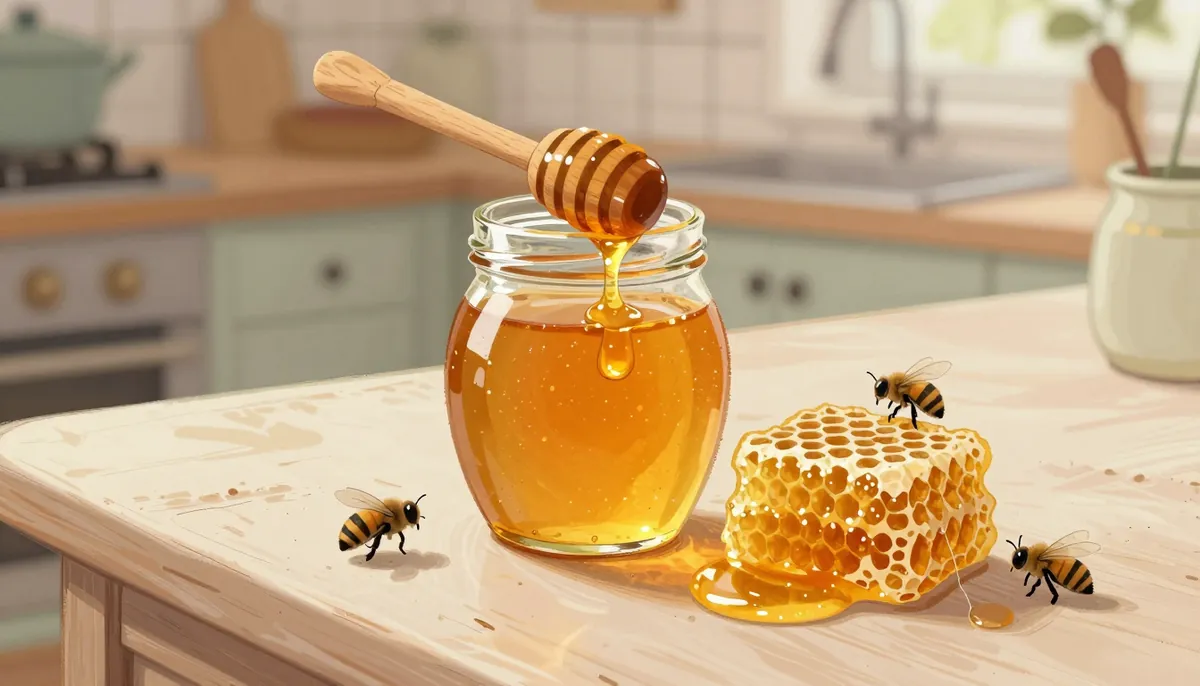
You find a jar of honey at the back of the cupboard, bought years ago. Should you toss it? In most cases, it’s still fine to eat. Well-stored honey is famous for almost never spoiling. The secret is in what it’s made of.
1. Too ‘dry’ for microbes
Honey looks liquid, but it’s only about 17–18% water. Nearly all the rest is sugar. When bacteria or mold land in something this sugary, the honey draws the water out of them instead. It’s the same idea that keeps salted pickles from spoiling.
2. More acidic than you’d think
Honey tastes sweet, but it’s fairly acidic, with an average pH of about 3.9. Most bacteria struggle to grow there.
3. A natural preservative from the bees
As bees turn nectar into honey, they add an enzyme called glucose oxidase. When honey is slightly diluted, this enzyme slowly produces small amounts of hydrogen peroxide, the same stuff used to disinfect cuts. It’s one reason people have put honey on wounds since ancient times.
There’s also a widely told story that edible honey thousands of years old was found in ancient Egyptian tombs.
What to watch out for
- Keep the lid on tight. Honey readily absorbs moisture from the air, and with enough water it can start to ferment. If it smells sour or looks foamy, don’t eat it.
- Turning white and solid isn’t spoiling. That’s crystallization, a natural process. Warm the jar in a bowl of hot water and it will melt again (gentler than the microwave).
- Never give honey to babies under one year old. Honey can occasionally contain botulism spores. Adults handle them fine, but an infant’s immature gut can’t.
In one line
Little water + acidity + natural hydrogen peroxide keep honey going. Just keep it sealed, and keep it away from babies!
How many everyday facts like this do you know? 👉 Human Body Trivia