Am I Tone Deaf? What Tone Deafness Really Is (and Isn't)
Singing off key at karaoke does not mean you are tone deaf. Real tone deafness, congenital amusia, is uncommon. The difference between hearing pitch and singing it, and how to train your ear.
November 9, 2026 · 2 min read
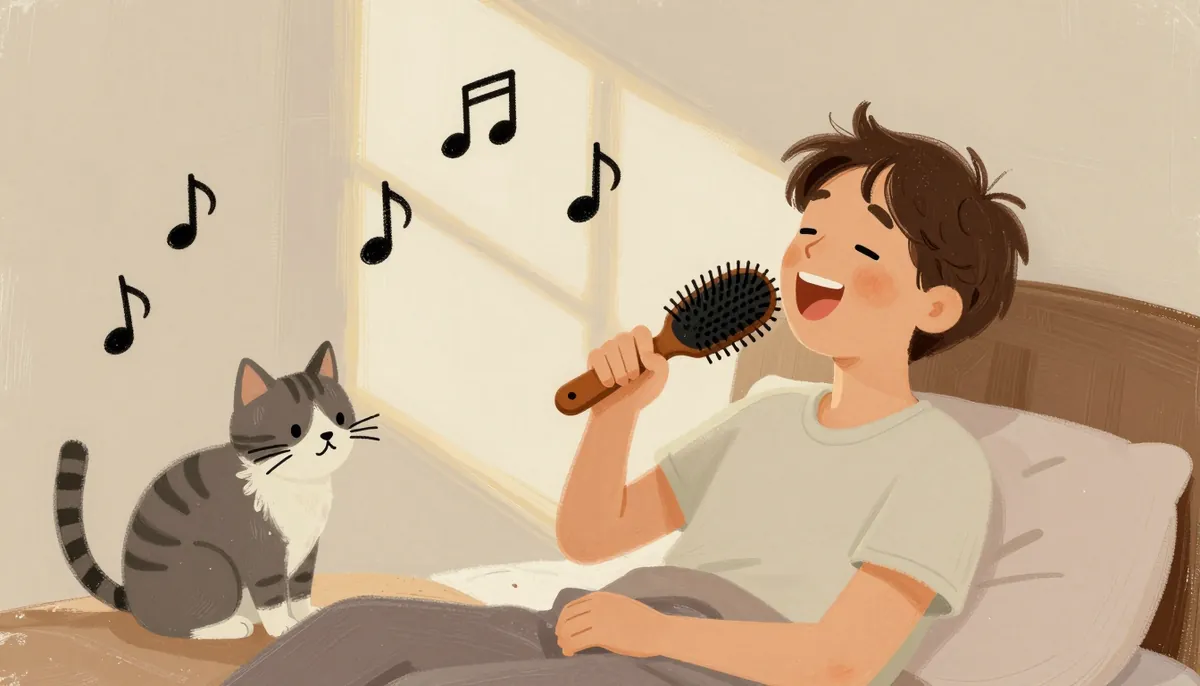
If your friends try not to laugh every time you pick up the karaoke mic, you may have said “I’m tone deaf” more than once. But singing badly and being truly tone deaf are quite different things.
Hearing pitch and producing it are separate skills
Singing in tune takes two abilities:
- Hearing: telling which of two notes is higher, and noticing when your voice is off
- Producing: making your voice land on exactly the note you want
Most people who sing off key are fine at the first and simply lack practice at the second. Controlling your voice is a skill, like playing an instrument, and it improves with practice.
Real tone deafness: congenital amusia
What scientists call tone deafness is congenital amusia. People with it have trouble noticing differences in pitch, so a familiar song with wrong notes may not sound strange to them. Many struggle to hear even a semitone, the step between two neighboring piano keys.
Estimates vary between studies, but it is generally thought to affect only a few percent of people. Many people who call themselves tone deaf actually hear pitch differences perfectly well.
Pitch differences are measured in cents
Musicians measure small pitch differences in cents. One semitone, a single piano key, is 100 cents.
- Experienced musicians can sometimes notice differences of just a few cents.
- Many people can tell apart differences of a few tens of cents.
- If even a full semitone is hard to hear, your pitch perception may be on the weaker side.
How to train your ear
- Record yourself singing along. Hearing your own voice objectively shows you exactly where you drift.
- Match single notes. Play a note on a piano app and hum the same pitch. When you match, the two sounds blend into one.
- Listen to music often and attentively. Pitch discrimination improves the more music you take in.
- Pick songs in your range. Songs that are too high or too low are hard for everyone.
In one line
Most off-key singing is a voice-practice issue, and true tone deafness, where you cannot hear pitch differences, is uncommon. You can measure how small a difference your ear can catch.
Can you pick the higher note? 👉 Tone Deaf Test